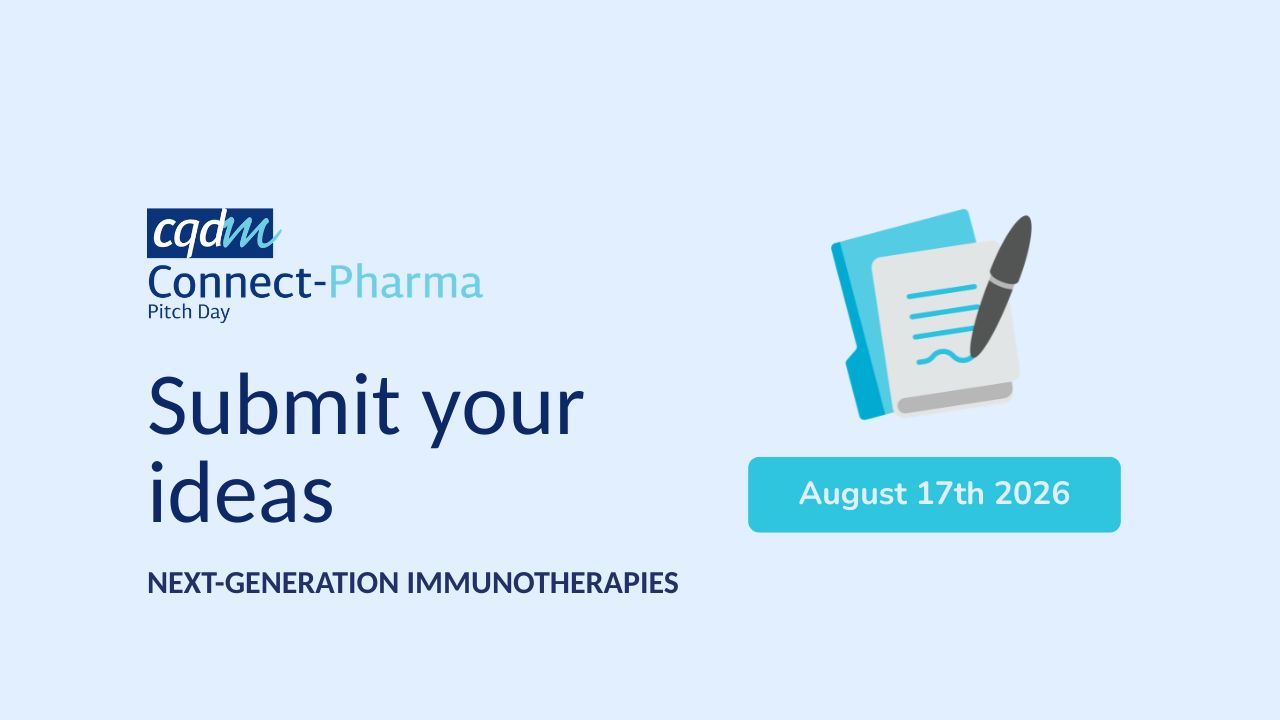
CQDM is pleased to launch a call for ideas for the upcoming CQDM Connect-Pharma: Pitch Day, focused on next-generation immunotherapies. Selected applicants will present their innovations to experts from CQDM’s global pharmaceutical members on September 16, 2026.
Our objective is to bring ground-breaking, innovative Canadian research to CQDM’s pharmaceutical members and facilitate interactions between our pharma members and the Canadian ecosystem.
Pitch Day: September 16, 2026
Submission Deadline: August 17, 2026
Research Focus Areas include (but are not limited to):
Immunotherapy has transformed oncology and is rapidly expanding into autoimmune and inflammatory diseases. However, first-generation approaches—particularly checkpoint inhibitors—have shown limited response rates, resistance mechanisms, and toxicity challenges across many patient populations. This call aims to support innovative technologies and therapeutic approaches that move beyond current paradigms and unlock new immunological mechanisms for treatment.
Next-Generation Immune Modulators
- Novel checkpoint targets beyond PD‑1/PD‑L1 and CTLA‑4, including pathways addressing resistance and non‑response
- Innate immune modulation (macrophage, NK, dendritic cells) to expand response beyond T‑cell–centric approaches
- Targeting immune metabolism and exhaustion pathways to restore durable anti-tumor activity
- Cytokine engineering (biased, conditionally activated, or localized) to enhance efficacy while minimizing systemic toxicity
Engineered Cell and Immune Therapies
- Next-generation engineered immune-cell therapies (in vivo or advanced CAR‑T/NK, TCR, multi-specific, logic-gated systems) optimized for solid tumors
- Cell therapies beyond oncology, including autoimmune indications with controlled immune modulation
- Technologies improving persistence, trafficking, and tumor infiltration, with particular focus on overcoming solid tumor barriers
- Safety-enhancing strategies to reduce cytokine release syndrome (CRS), neurotoxicity, and off-tumor effects
- Technologies improving the activity and therapeutic index of T-cell-targeting antibody therapeutics (e.g., TCEs)
- Targets and technologies that induce, maintain, or activate stem-like exhausted T cells associated with durable anti-tumor responses
Targeted Immune Activation
- Tumor- or tissue-specific activation strategies enabling localized immune engagement
- Conditionally active biologics (e.g., pH-, protease-, or microenvironment-activated) for precision targeting
- Approaches to reduce systemic immune-related toxicity while maintaining potency
New Therapeutic Modalities
- Immunomodulatory antibodies (mono-, bi-, multi-specific) designed for combinability and enhanced selectivity
- Next-generation ADCs incorporating immune-activating payloads or mechanisms beyond cytotoxicity
- RNA-, DNA-, and gene-editing–based immune modulation enabling transient or programmable immune control
- Targeted protein degradation (molecular glues/PROTACs) to modulate immune pathways and intracellular targets
Tumor microenvironment (TME) reprogramming
- Strategies to convert “cold” tumors to “hot”, enabling response to immunotherapies
- Modulation of suppressive niches, including stromal, metabolic, and hypoxic environments
- Targeting immunosuppressive cell populations (Tregs, MDSCs, TAMs)
- Microbiome-based approaches to enhance systemic and local immune responses
- Technologies increasing immune cell infiltration into solid tumors using validated antibody- or cytokine-targetable mechanisms, including modulation of tumor vasculature, stroma, and extracellular matrix and induction or maturation of tertiary lymphoid structures (TLS)
Translational tools
- Spatial and single-cell profiling technologies to dissect tumor-immune interactions
- Functional immune assays and translational models bridging preclinical to clinical outcomes
- AI-enabled digital pathology and immune phenotyping to support decision-making and trial design
Process
All submitted ideas will be evaluated by CQDM’s pharmaceutical members. Top-ranked proposals will be selected to present at CQDM Connect-Pharma: Pitch Day on September 16, 2026.
Who Can Apply
- Canadian academic researchers and research hospitals
- Biotech companies and start-ups
- Cross-sector or interdisciplinary collaborations
- Academia–industry partnerships
Deadline & Submission Instructions
Submission Deadline: August 17, 2026
Apply by sending the submission form alongside a short presentation (5 to 10 slides) to [email protected]
About CQDM
CQDM is a non-profit biopharmaceutical research consortium supporting collaborative R&D to accelerate translation of cutting-edge discoveries into vaccines, therapeutics, and diagnostics addressing unmet medical needs and benefiting the Canadian economy.

For more information, contact Simon Fournier [email protected].